

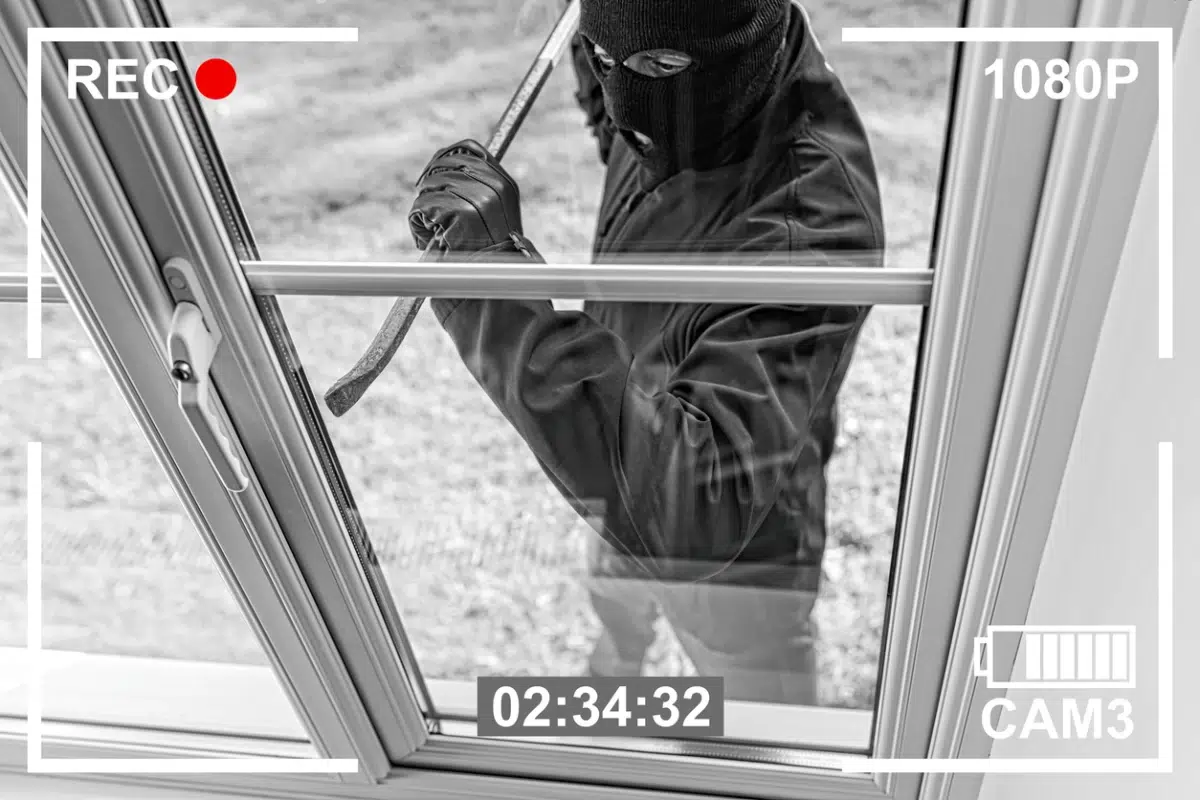

The term “burglary” is often interpreted as breaking and entering into a structure to commit a theft. However, Illinois burglary charges are divided into three offenses, with your possible prison sentence depending on the specific offense charged.
An experienced criminal defense attorney can answer the question “What is burglary in the 1st degree, 2nd degree, and 3rd degree?” Your Chicago burglary attorney can then craft a defense strategy for responding to the specific charges you face.
What Is Burglary Under Illinois Law? Understanding the Degrees
Burglary occurs when someone knowingly enters or remains within a structure without authority with the intent to commit a theft or any felony. The main factor that distinguishes burglary from robbery in Illinois is that burglary does not require the use of force or threats of force. In fact, burglary can be committed in an empty structure.
The structures included in the burglary statute include the following:
- Building
- House trailer
- Watercraft
- Aircraft
- Motor vehicle
- Railroad car
- Freight container
The term “knowingly” means that the accused knew the nature of their actions and that they would produce the prohibited result.
For example, someone commits burglary when they open an unlocked house door without permission and reach in to grab someone else’s jewelry. Regardless of whether they knew the burglary statute, they knew that their actions occurred without the permission of the homeowner or jewelry owner.
Conversely, burglary does not occur when someone accidentally falls, breaks a window, and enters a building because the act was not committed knowingly. However, if the person takes an object that does not belong to them, they have committed a burglary because they knowingly remained there to commit a theft.
Notably, burglary can occur even if the accused did not commit or intend to commit a theft. For example, entering someone’s home without permission to commit a homicide, a sexual assault, or other violent crimes would qualify as burglary. Thus, the accused could face charges for the burglary and the felony they intended to commit while in the other person’s property.
Burglary charges can be filed against anyone who meets these elements. However, the severity of the charges depends on the nature of the offense. The Illinois burglary statute does not use the terms 1st degree, 2nd degree, and 3rd degree burglary. However, the offenses listed in the burglary statute vary in severity.
What Is Burglary in the 1st Degree?
The most severe penalties for burglary charges apply to a first-degree burglary in Illinois committed in any of the following buildings:
- School
- Day care center
- Day care home
- Group day care home
- Part-day child care facility
- Place of worship
This offense does not apply to any of these facilities that are located in a private home.
Notably, prosecutors can charge a suspect with this offense even if the building was not occupied when the alleged break-in occurred.
What Is Second-Degree Burglary in Illinois?
Second-degree burglary occurs when the accused commits a burglary in a building or a house trailer. It can also happen when the accused causes damage while committing a burglary in an aircraft, watercraft, railroad car, motor vehicle, or freight container.
What Is Third-Degree Burglary in Illinois?
Third-degree burglary happens when the accused commits a burglary in an aircraft, watercraft, railroad car, motor vehicle, or freight container without causing any damage.
Sentencing Ranges and Penalty Classifications for Burglary Offenses
A conviction can result in the following Illinois felony burglary penalties:
Class 1 Felony Burglary in Illinois
First-degree burglary is a Class 1 felony. This offense is subject to a usual prison sentence of four to 15 years. Upon proof of aggravating sentencing factors, such as a prior conviction, the offender may face an extended sentence of 15 to 30 years.
Class 2 Felony Burglary in Illinois
Second-degree burglary is a Class 2 felony. This offense is subject to a usual prison time of three to seven years, with a possible extended sentence of seven to 14 years upon proof of aggravating sentencing factors.
Class 3 Felony Burglary in Illinois
Third-degree burglary is a class 3 felony. Class 3 felony burglary sentencing in Illinois includes a usual prison sentence of two to five years and an extended sentence of five to ten years when the judge finds that aggravating sentencing factors exist.
Key Legal Elements Prosecutors Must Prove for Each Degree
For all burglary offenses, prosecutors must prove the following elements:
- The accused knowingly entered or remained in a structure without authority
- The accused had the intent to commit a theft or a felony
To prove the offense degree, the prosecution must also prove the type of structure where the alleged entry occurred and whether the accused caused any damage, as follows:
- Third-degree burglary occurs in an aircraft, watercraft, railroad car, motor vehicle, or freight container
- Second-degree burglary occurs in a building or a house trailer
- Second-degree burglary can also occur with proof of property damage while entering an aircraft, railroad car, watercraft, motor vehicle, or freight container
- First-degree burglary occurs in a school, place of worship, or daycare facility
Prosecutors must prove every element of the offense. If any element is missing or disproven by a skilled criminal defense attorney, the accused must be acquitted.
Aggravating Factors That Can Increase the Severity of Burglary Felony Charges
The Illinois statutes include the two burglary offenses that carry more severe penalties than a standard burglary. Residential burglary can happen in two circumstances. First, residential burglary occurs when the accused knowingly and without authority enters or remains in a dwelling place of another to commit theft or any felony.
Second, a person violates the residential burglary in Illinois law when the accused falsely represents themselves to gain entry to another’s dwelling to commit a theft or other felony. Examples of false representation in the statute include holding themselves out to represent the government, a telecommunications company, or a utility company.
A residential burglary charge is a Class 1 felony subject to a usual sentence of four to 15 years or an extended sentence of 15 to 30 years upon proof of aggravating sentence factors.
Another aggravated offense is called home invasion. This criminal offense occurs when the accused enters another’s dwelling without permission or falsely represents themselves to gain entry when they know or should know that people are present in the dwelling. Additionally, prosecutors must prove at least one of the following elements:
- The accused was armed with a dangerous weapon
- The accused used force or threats of imminent force against any person in the dwelling
- The accused caused any injury
- The accused was armed with a firearm and used force or threats of imminent force
- The accused discharged a firearm while using force or threats of imminent force
- The accused discharged a firearm, causing death, great bodily harm, permanent disfigurement, or permanent disability
- The accused committed sexual assault against any person in the dwelling
Home invasion is a Class X felony punishable by a usual prison term of six to 30 years or an extended term of 30 to 60 years with proof of aggravating sentence factors.
Defense Strategies Used in Illinois Burglary Cases
Your attorney will craft a defense strategy to disprove an element of the offense or establish an affirmative defense to your charges to help you avoid serious prison time. Some possible defense strategies include the following:
Plead the Charges Down
Chicago burglary charges can be pled down to lesser, related crimes such as criminal trespass or unlawful possession of burglary tools. This defense might be a good option if prosecutors lack strong evidence of your intent to commit theft or a felony once you entered the premises. It may also work when prosecutors cannot prove that you actually entered the property.
Possession of burglary tools is a Class 4 felony, subject to a usual sentence of one to three years of imprisonment and an extended sentence of three to six years. Criminal trespass to a residence may be a Class 4 felony or a Class A misdemeanor, depending on the circumstances.
A criminal defense attorney may be able to help you avoid a felony conviction with a plea deal for criminal trespass.
Disprove Unlawful Entry
The statute requires proof of unlawfully entering the structure. Your attorney may be able to disprove this critical element. For example, if you had permission from a co-owner of a residence, you might have had lawful authority to enter, even if the other co-owner objected.
You might even disprove unlawful entry if you made a reasonable mistake. Thus, you might obtain a favorable outcome for your criminal charge if you entered someone else’s car by mistake, thinking it was your car.
How Burglary Cases Move Through the Illinois Criminal Court System
Whether you face a criminal charge for an ordinary or aggravated burglary in Illinois, your case will typically start when the police question you. This may occur at the scene, or it may occur later when the police find evidence that points to you.
You should consider engaging a lawyer to represent you during any questioning. If the police have probable cause to believe that you committed burglary, they will arrest you.
After your arrest, you will be booked into jail. During your first court appearance, you will be arraigned when the court informs you of the charges against you. The judge may also conduct a bail hearing at this point. Your defense attorney will fight for your pre-trial release so you can assist in your defense.
Your attorney’s law offices will investigate your case by reviewing the prosecution’s evidence and seeking additional exculpatory or mitigating evidence. The lawyer will discuss the evidence with the prosecution team and seek a dismissal of your charges or a plea deal.
You will have the power to approve or reject any plea offer. If no plea deal is reached, your lawyer will take your case to trial, where they will present your evidence to a jury and advocate for an acquittal.
Contact Kostopoulos Law Group for a Free Consultation With an Illinois Burglary Charges Criminal Defense Lawyer
What is burglary in the 1st degree? What is burglary in the 2nd degree or 3rd degree? These are serious offenses that can carry harsh penalties. Our attorneys have litigated thousands of criminal cases, including serious burglary accusations. Contact us to discuss your charges and the criminal defense strategies we can use to seek a positive outcome for your case.